

As 2026 begins, fleet managers and rental companies are reviewing their spreadsheets to optimize the Total Cost of Ownership (TCO). While acquisition price and resale value often dominate discussions, one underestimated factor can drastically change your numbers: the human factor. What if your best resolution this year was to invest in eco-driving and operator training? These two levers can transform machine usage into profitability, reduce costs, and boost sustainability.
1. TCO: beyond the purchase price
TCO is not just about what you pay upfront. It includes all direct and indirect costs throughout the machine’s lifecycle:
- Direct costs: acquisition, financing, insurance.
- Indirect costs: maintenance, energy consumption, tire wear, downtime, and operator-related expenses.
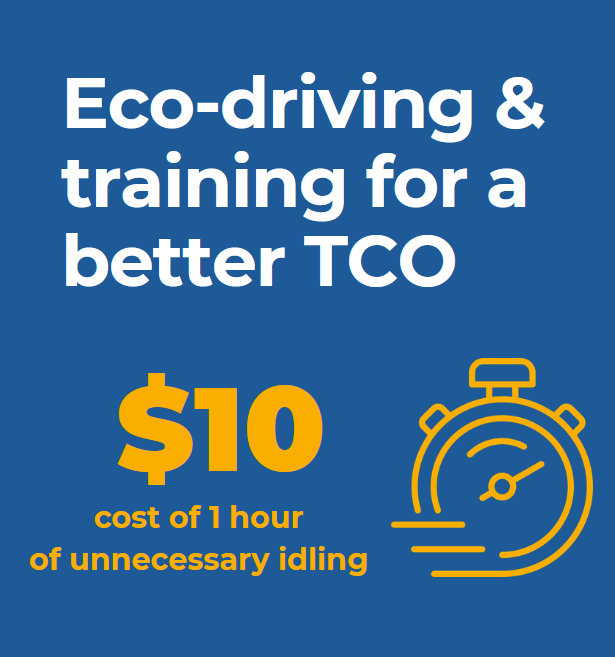
Indirect costs represent over 50% of total ownership costs, meaning that optimizing usage practices can have a major financial impact. Every hour of unnecessary idling costs around $10, and over a year, that adds up to thousands.
2. Eco-driving applied to AWPs: more than fuel savings
When we talk about eco-driving, most people picture trucks on highways. But the concept is just as critical for aerial work platforms, whether diesel or electric. Eco-driving for AWPs rests on three pillars:
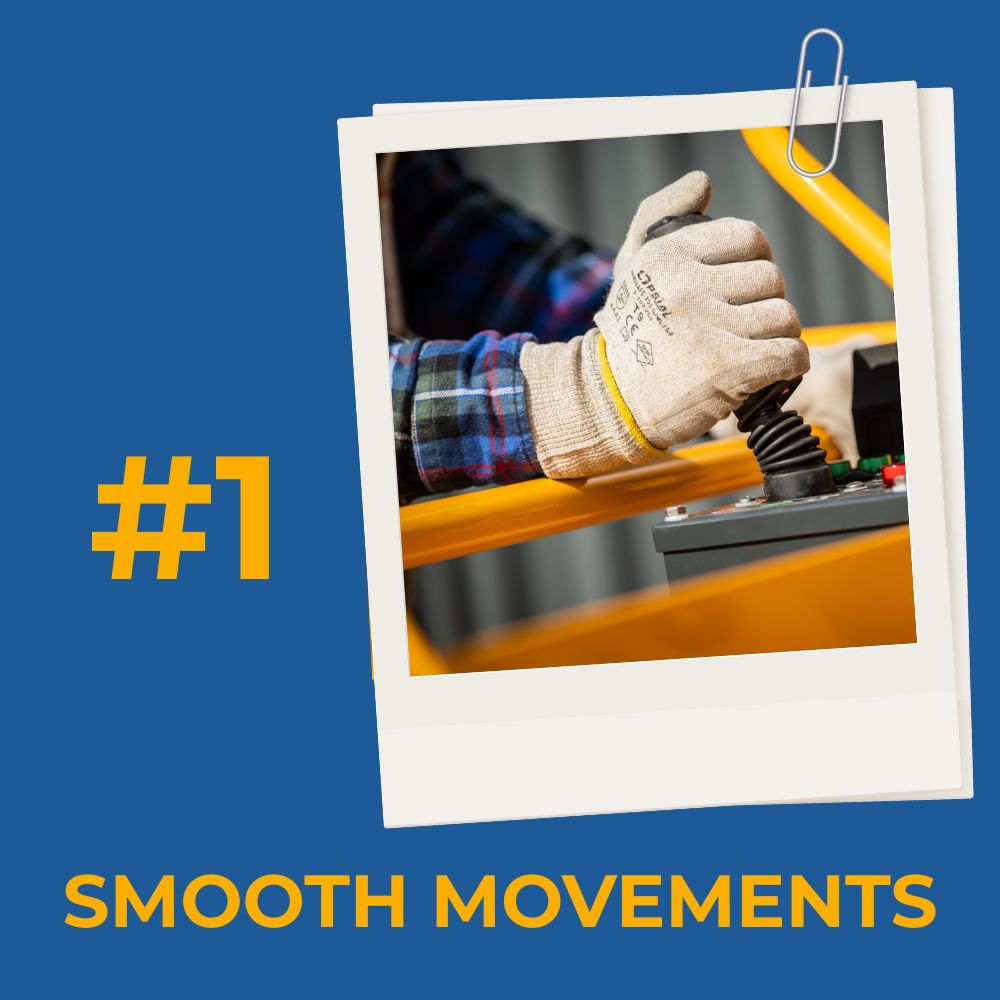
- Smooth movements: Avoid harsh starts and stops that stress hydraulic components, brakes, and tires.
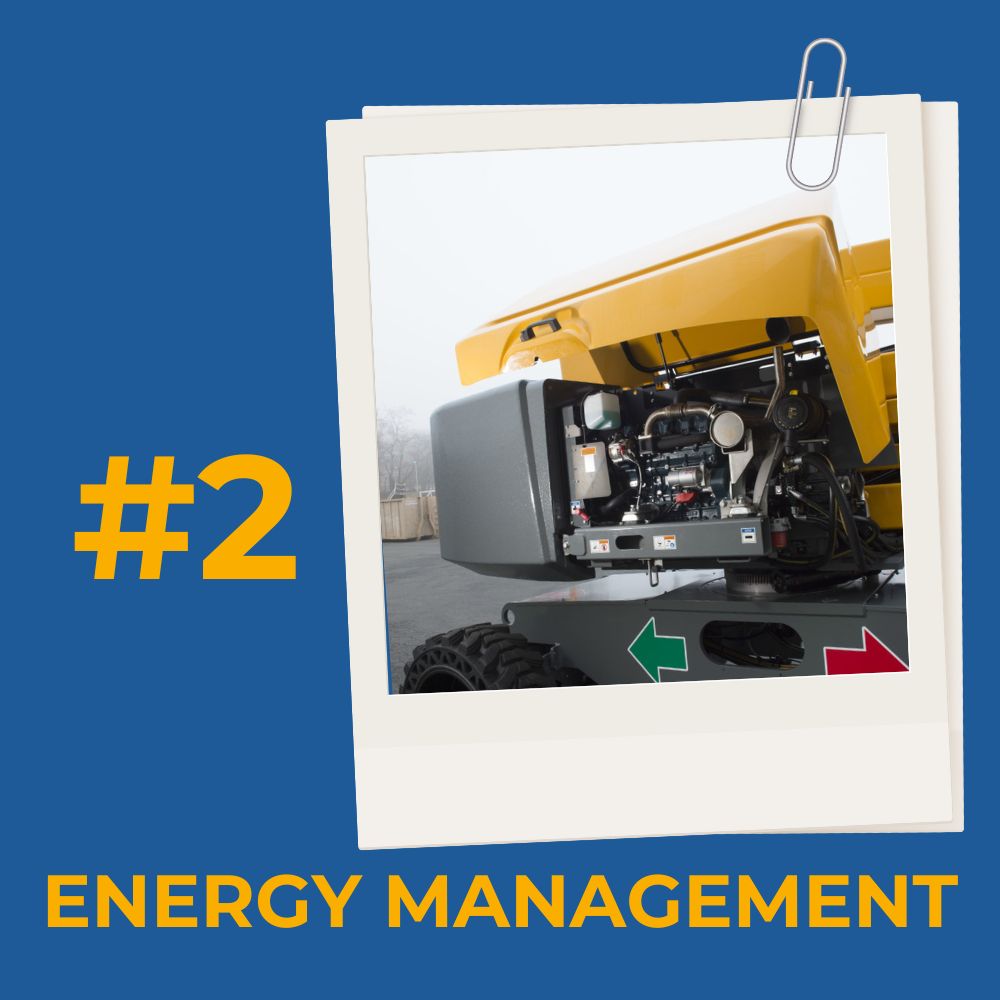
- Energy management: On electric machines, use inertia and avoid unnecessary power peaks to extend autonomy on site. For diesel powered engines, consider the Start & Stop option, which reduces fuel consumption by turning off the engine during “idle” periods.
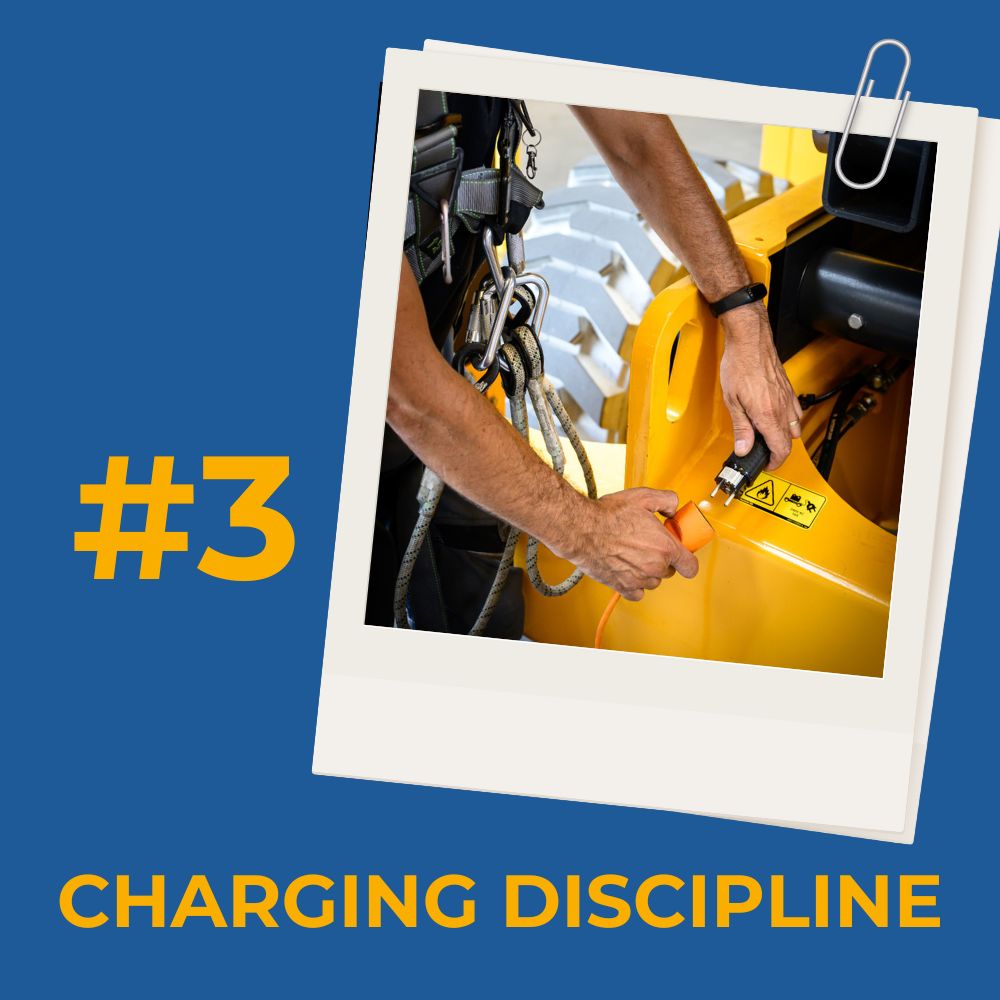
- Charging discipline: For electric models, proper charging cycles are the number one factor for battery longevity.
These habits not only reduce energy consumption by up to 15%, but also extend tire life by 20%, lowering maintenance costs and improving uptime.
3. Training: the direct impact on maintenance and safety
Training is not just a legal requirement—it’s a strategic investment. Studies show that trained operators generate up to 30% fewer breakdown costs.
Why? Because they understand the machine:
- They respect load charts and axle extension limits.
- They avoid forcing components, reducing stress on cylinders and tires.
Safety also improves: smoother driving reduces the risk of catapult effect (especially on boom lifts) and collisions. Always ensure operators hold a valid IPAF PAL card and receive model-specific familiarization.
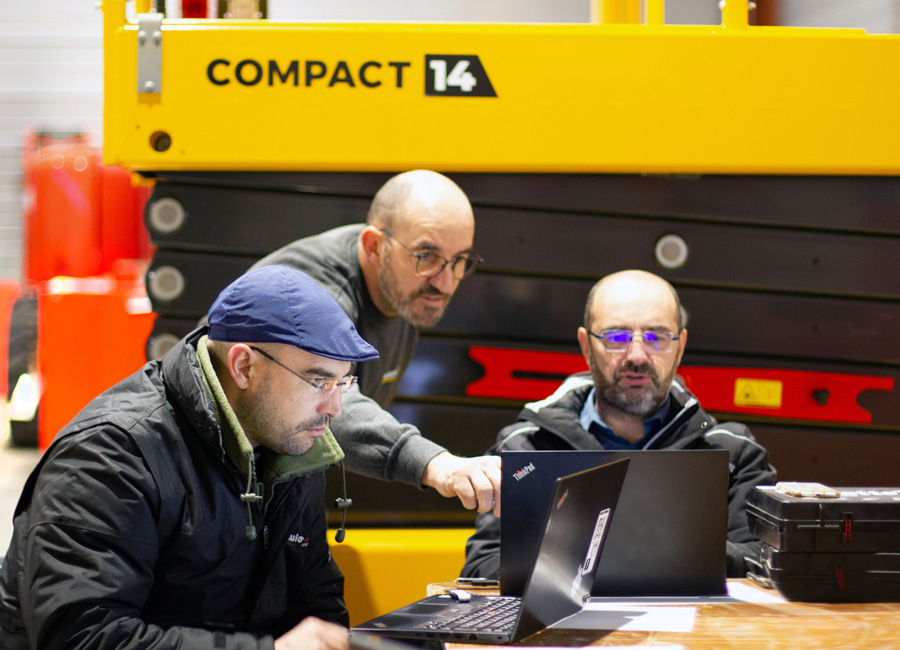
4. Connected solutions: data meets human expertise
How do you know if your machines are being eco-driven? That’s where Haulotte’s Sherpal telematics comes in. In 2026, Sherpal is more than a GPS it’s your TCO diagnostic tool:
- Charge cycle analysis: Identify machines with poor charging habits and target training.
- Idle vs working time ratio: Detect machines running “empty,” consuming engine hours without generating rental value.
The synergy between data (Sherpal) and human expertise (training) creates measurable economic performance.
5. Sustainability: A resolution that pays off
Eco-driving is not only about saving money, it’s about reducing your carbon footprint. Lower energy consumption means fewer emissions, and extending component life reduces waste. For companies committed to low-emission job sites, this is a key differentiator in 2026.
For 2026, stop seeing training as a mandatory expense. See it as an investment in profitability. A well-driven machine breaks down less, consumes less, and retains higher resale value.